Updated
The brown mushrooms that kill people looking for these
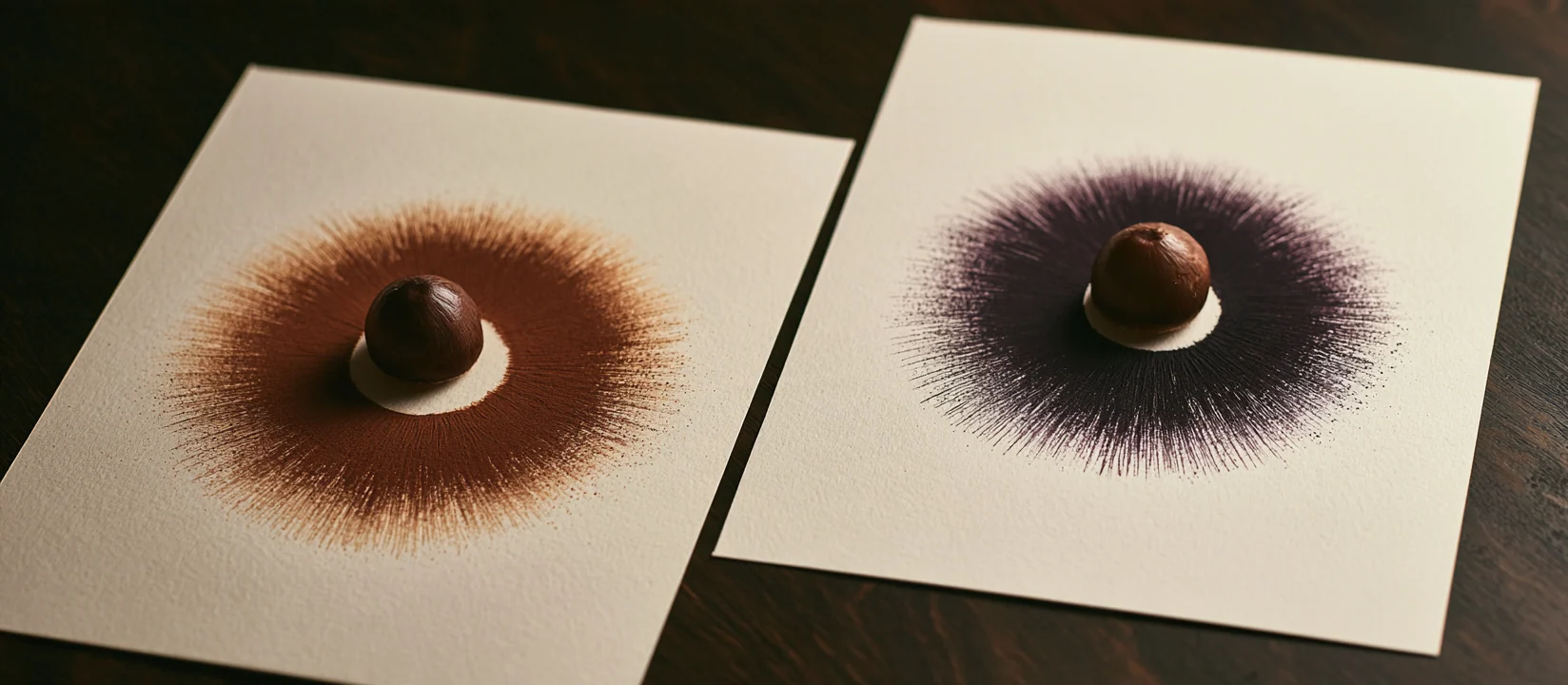
A deadly Galerina fruits on the same wood chips, in the same weeks, at the same size as a wavy cap, and carries the poison that kills people who eat a death cap. A spore print separates them and nothing about the look does.
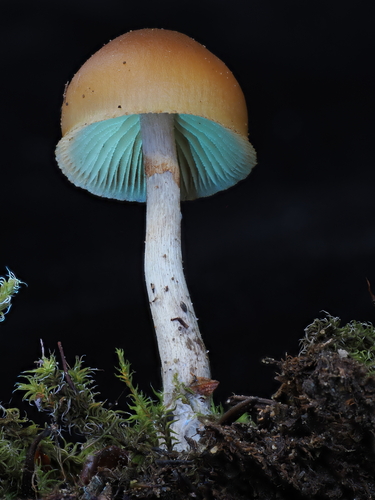
Deadly galerina Galerina marginata
Can kill
Amatoxins — the same group that kills people who eat a death cap. Liver failure, often after a deceptive day of feeling better.
It fruits on the same wood chips and conifer debris as Psilocybe cyanescens, in the same autumn weeks, at the same small brown size. This is the confusion that has actually killed foragers.
How to tell them apart Galerina has a rusty-brown spore print and never bruises blue. A Psilocybe has a purple-brown to black spore print and bruises blue-green where it is handled. A spore print takes a few hours and is the only reliable separation of the two.
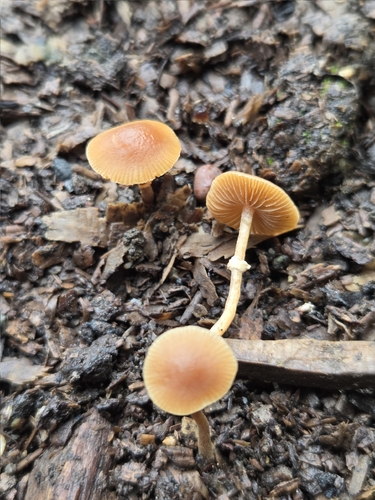
Deadly conocybe Pholiotina rugosa
Can kill
Amatoxins. Fatal cases are documented from small quantities.
A small brown lawn mushroom with a conical cap, in the mown grass and wood chips where people look for liberty caps.
How to tell them apart Rust-brown spore print, no blue bruising, and a ring on the stem that liberty caps do not have.
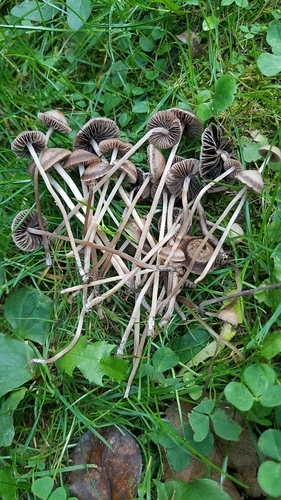
Mower's mushroom Panaeolina foenisecii
Not poisonous and not psychoactive. The commonest disappointment rather than the commonest danger.
The single most abundant small brown mushroom in mown grass, fruiting in exactly the lawns where liberty caps are hunted.
How to tell them apart A dark brown, banded cap that does not come to a point, and no blue bruising.
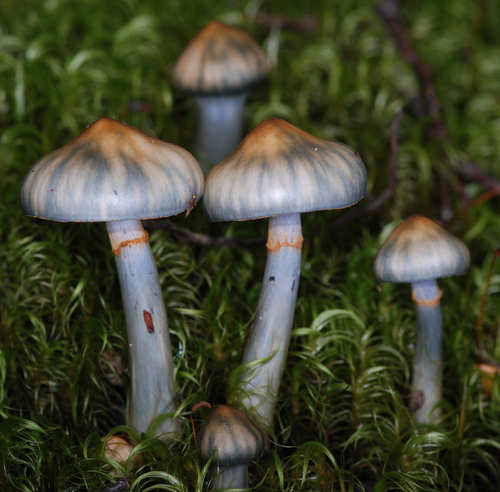
Webcaps Cortinarius species
Can kill
Several carry orellanine, which destroys the kidneys — and does so weeks after the meal, long after anyone would connect the two.
Rust-brown spores and brown caps put them in the same visual bracket as a Gymnopilus.
How to tell them apart A cobwebby veil (the cortina) between the cap edge and the stem when young, and rusty spores caught in it. No blue bruising anywhere.
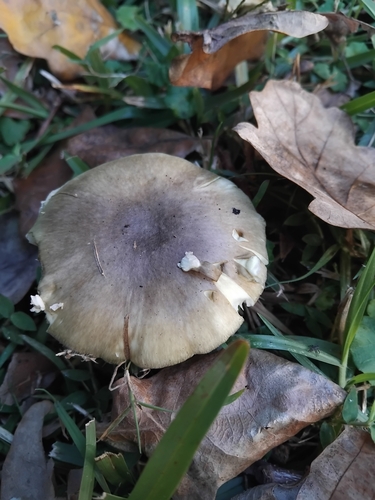
Death cap Amanita phalloides
Can kill
Amatoxins. The mushroom responsible for most fatal mushroom poisonings worldwide.
Anyone who has decided Amanita muscaria is safe to eat is working in the one genus where the deadliest species lives.
How to tell them apart Greenish to olive cap, white gills, a sac-like volva at the base, white spore print. It does not have the red cap and white warts of a fly agaric — but the point stands that this is the genus being handled.